 (281) 242-1061
 Schedule Consultation

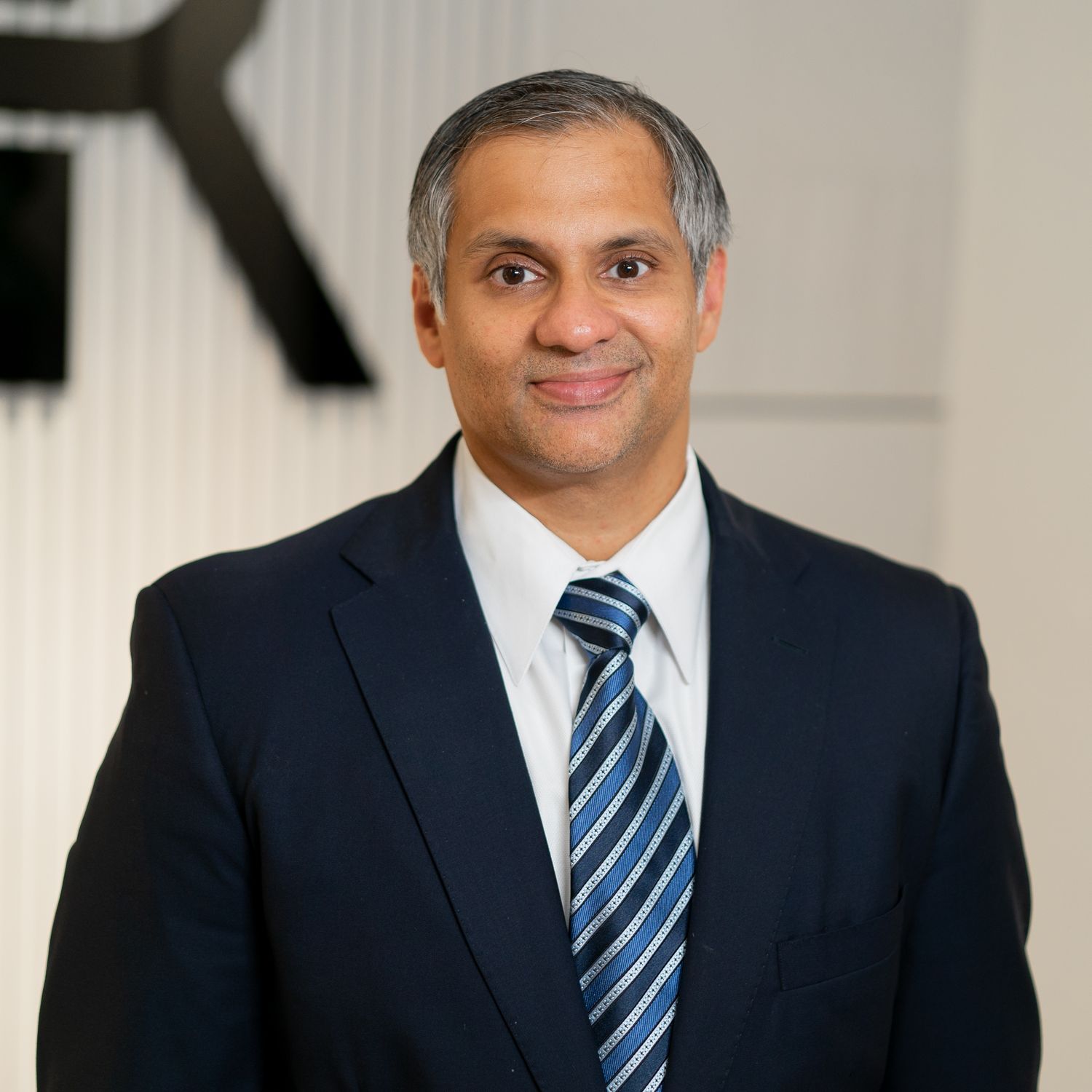
Dr. Ravi is a board-certified plastic surgeon with more than 20 years of experience and over 15,000 procedures performed. Many tummy tuck patients return gradually to light daily activities and desk-based work within approximately one to two weeks, while strenuous exercise, heavy lifting, core training, swelling reduction, and scar maturation continue for several weeks to months.
Tummy tuck recovery is a staged process rather than a single return-to-normal date. Early healing usually involves abdominal tightness, swelling, fatigue, flexed posture, numbness, and limited mobility, while later recovery focuses on standing fully upright, regaining strength, reducing residual swelling, and allowing the abdominal wall and scar to mature.
At Body by Ravi Plastic Surgery & Associates, Dr. Ravi tailors recovery guidance to the actual surgical plan. Patients who undergo muscle repair, liposuction, high-definition contouring, or more extensive skin removal may experience a different recovery than someone having a more limited abdominoplasty.
Dr. Ravi’s SMART Abdominoplasty approach incorporates progressive tension sutures, Enhanced Recovery protocols, scar optimization, and careful tissue handling to support healing. The goal is to help patients move safely, manage discomfort, protect the abdominal repair, and understand how their contour will continue changing over time.
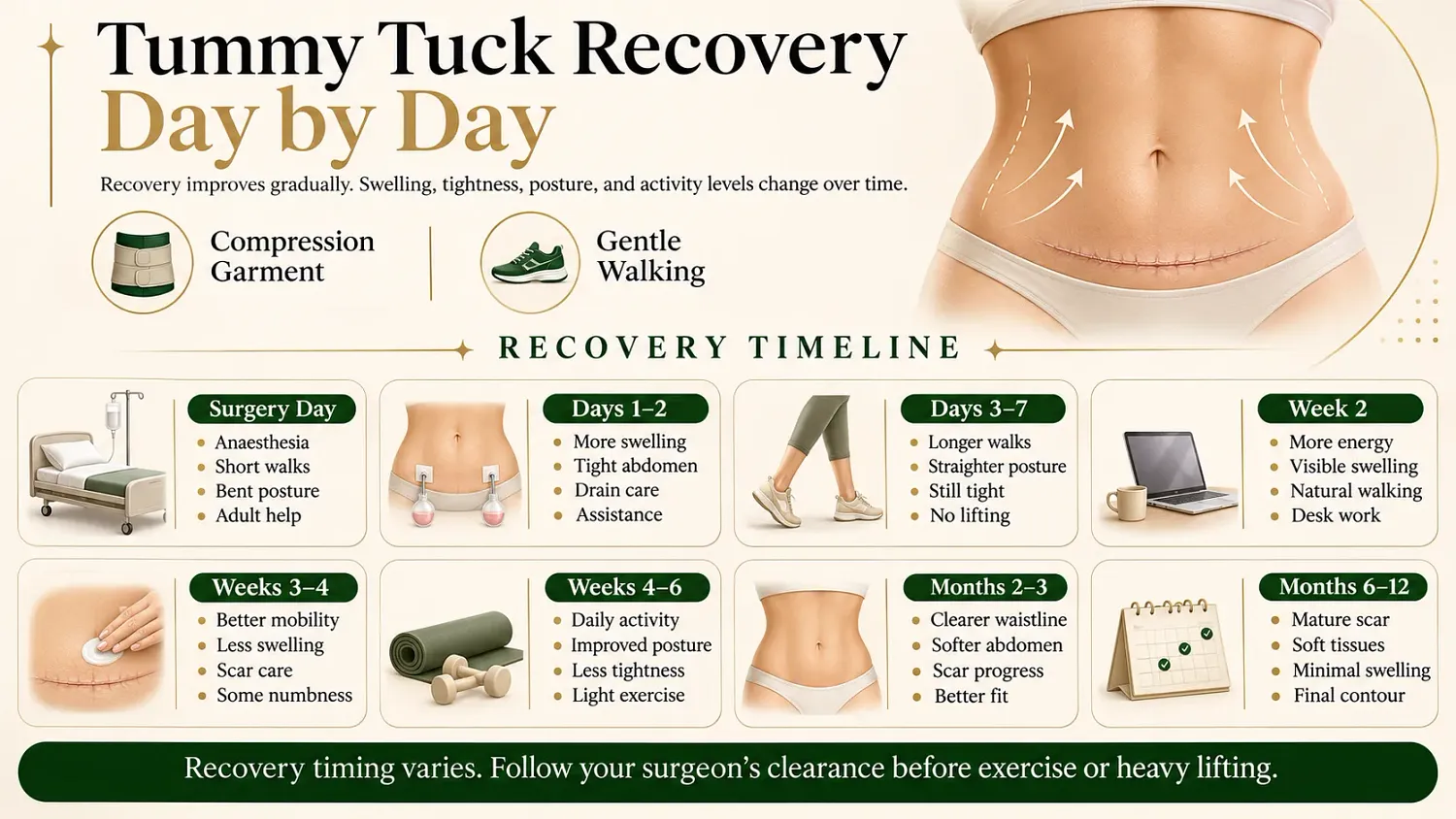
Many patients return to light daily activities and desk-based work within approximately one to two weeks after a tummy tuck, while heavy lifting, strenuous exercise, and direct core training are restricted longer. Most patients progress toward broader activity over four to six weeks or more depending on muscle repair, liposuction, healing, and Dr. Ravi’s clearance.
tightness, swelling, fatigue, and limited mobility are most noticeable
short walks increase gradually while patients usually remain slightly flexed
many light daily activities and desk-based work may resume
posture, mobility, and activity tolerance continue improving
abdominal contour becomes easier to assess as swelling decreases
scars and subtle contour refinement continue maturing
The exact timeline depends on muscle repair, liposuction, incision length, tissue quality, general health, work demands, and individual healing.
Tummy tuck recovery usually involves swelling, abdominal tightness, fatigue, temporary numbness, limited mobility, and a gradual return to upright posture. These changes typically improve in stages as the skin, abdominal wall, internal sutures, and incision continue healing.
Feeling better does not mean the abdominal tissues are fully healed. Functional recovery, muscle healing, scar maturation, and final contour refinement all progress on different timelines.
The day of surgery is focused on recovering from anesthesia, managing discomfort, beginning gentle movement, and protecting the abdominal repair. Patients commonly feel tight, swollen, tired, and unable to stand completely upright.
The abdomen may look swollen and feel firmer than expected. The early postoperative appearance should not be used to judge the final contour.
The first 48 hours are often the most restrictive part of recovery because swelling, tightness, and fatigue are prominent. Movement usually feels slow, and patients may continue walking in a slightly bent position to reduce tension across the lower abdominal incision.
Patients should avoid forcing themselves upright. The priority is gentle mobility while protecting the healing abdominal wall.
During the remainder of the first week, walking generally becomes easier and patients often feel more independent. Tightness and swelling remain, but movement begins feeling less unfamiliar.
Many patients feel substantially better by the end of the first week, but this is still an early healing stage. Doing too much because discomfort has improved can increase swelling and fatigue.
The second week often marks a meaningful improvement in independence. Many patients are standing more upright, moving more comfortably, and considering a return to desk-based or remote work.
Patients should still avoid heavy lifting, strenuous exercise, and direct core training. Internal healing continues even when everyday movement feels easier.
By weeks three and four, posture and mobility usually improve considerably. Patients may feel close to normal during routine activities, although the abdomen can still feel firm, numb, or tight after a more active day.
This is often when patients begin seeing a clearer abdominal contour, but residual swelling can still obscure the final result.
During weeks four through six, activity generally expands based on healing and the extent of muscle repair. Some patients may begin light exercise progression, while others need more time before loading the abdominal wall.
Patients should still follow Dr. Ravi’s clearance before returning to running, heavy lifting, planks, crunches, or intense resistance training.
By months two and three, the abdominal contour is usually easier to evaluate. Swelling becomes more subtle, the abdomen feels less rigid, and movement is more natural.
The result is more representative at this stage, but subtle swelling and tissue remodeling can continue.
Long-term refinement continues well after patients return to normal activities. Scar color, tissue softness, and subtle contour changes can continue improving for six to twelve months or longer.
The final result should be judged over months rather than weeks.
Difficulty standing completely upright is common after a tummy tuck because the abdominal skin and deeper tissues have been tightened and may also have undergone muscle repair. A slightly flexed posture protects the lower abdominal incision and reduces tension while early swelling and tightness are at their highest.
Most patients gradually straighten as the tissues relax and swelling decreases. Forcing an upright posture too early can increase discomfort and unnecessary tension.
There is no single day when every patient should suddenly stand fully upright. Posture usually improves gradually over the first several weeks depending on tissue tightness, muscle repair, swelling, and individual healing.
The abdomen may feel tighter later in the day because activity, gravity, and swelling accumulate over several hours. This can temporarily make patients feel more flexed again even when their overall posture is improving.

A tight or hard abdomen is common after tummy tuck surgery because swelling, muscle repair, internal sutures, and tissue remodeling all contribute to temporary firmness. These sensations usually become less noticeable as healing progresses.
The abdomen often remains firmer than patients expect even after bruising is gone. Gradual softening over time is generally part of normal recovery.
Bruising resolves faster than deeper tissue healing. Internal swelling, scar remodeling, and muscle tightness can therefore persist for weeks or months after visible bruising has disappeared.
Activity increases circulation and can temporarily worsen swelling, making the abdomen feel tighter or heavier later in the day. This usually improves with rest as recovery advances.


When a tummy tuck includes repair of abdominal muscle separation, recovery often involves greater tightness and a slower return to direct core activity. The repaired abdominal wall needs time to heal before it is exposed to heavy lifting, intense bracing, or strenuous abdominal exercise.
Patients who have muscle repair should not use comfort alone to determine readiness for exercise. The deeper abdominal wall can still be healing even when the incision looks well healed.
Coughing and sneezing activate the abdominal muscles suddenly, which can make the repaired area feel tight or sore. Supporting the abdomen gently with a pillow when coughing or sneezing may improve comfort if Dr. Ravi recommends it.
The muscle repair generally becomes less noticeable as swelling decreases and the abdominal wall heals over the following weeks and months. Tightness during standing, stretching, or changing position often improves gradually rather than disappearing at once.

Swelling is most noticeable during the early weeks and usually decreases progressively, although residual lower-abdominal swelling may continue for several months. Liposuction, high-definition contouring, activity level, heat, and individual healing can all influence how long swelling remains visible.
This recovery hub should provide the general context, while detailed bruising and swelling patterns are better covered in the dedicated Bruising and Swelling After Tummy Tuck Surgery resource.

Activity, gravity, heat, and normal fluid shifts can make swelling more noticeable later in the day. These fluctuations generally become less pronounced as healing progresses.
Fluid can settle lower in the abdomen because of gravity and the location of the surgical dissection. Lower-abdominal swelling commonly takes longer to disappear than swelling higher on the torso.
The belly button can look swollen, red, crusted, or slightly uneven during early tummy tuck recovery. Its appearance typically continues changing as swelling decreases, the surrounding tissues settle, and the scar matures.
The recovery focus should be on healing rather than the aesthetic design of the belly button, which is better addressed on the main tummy tuck procedure page.
The belly button can look different as swelling, skin tension, and scar firmness change during healing. Week-to-week variation is common before the surrounding tissues fully settle.
Increasing redness, worsening pain, concerning drainage, darkening skin, or an opening that appears to be getting larger should be reported to Body by Ravi Plastic Surgery & Associates. Early communication allows the surgical team to determine whether the change is expected or needs evaluation.
 Sleeping after a tummy tuck is usually most comfortable when the upper body is elevated and the hips and knees remain slightly flexed. This position reduces tension across the lower abdominal incision and can make early tightness feel more manageable.
Sleeping restrictions should ease gradually as posture improves and the tissues relax. Patients should not force a flat sleeping position simply because daytime mobility feels better.
Sleeping completely flat should wait until the abdomen can comfortably extend without creating significant pulling across the incision or muscle repair. Dr. Ravi will advise when the tissues are ready based on healing rather than a fixed date.
Side sleeping usually returns later because twisting into position can place uneven tension on the abdomen. Patients should wait until they can roll, turn, and lie on the side without straining the incision or abdominal wall.
Stomach sleeping places direct pressure across the abdomen and is generally one of the later positions to resume. Patients should wait until Body by Ravi Plastic Surgery & Associates confirms that the abdominal tissues and scar can tolerate this pressure.
Compression garments may be used after tummy tuck surgery to support healing tissues, improve comfort, and help manage swelling. The ideal garment and duration depend on the extent of abdominoplasty, liposuction, swelling, and Dr. Ravi’s postoperative plan.
Compression should feel supportive rather than restrictive. A garment that becomes uncomfortable as swelling changes may need to be adjusted rather than simply tolerated.
The garment may feel tighter on days when swelling increases after activity, heat exposure, prolonged standing, or higher sodium intake. If it causes sharp pain, numbness, skin discoloration, breathing difficulty, or deep pressure marks, contact Body by Ravi Plastic Surgery & Associates.
There is no universal timeline because compression needs depend on the procedure and how swelling is progressing. Dr. Ravi will advise when patients can reduce garment use or transition to a different level of support.
Return to work depends on the physical demands of the job and the complexity of the tummy tuck. Many patients with desk-based or remote work may return within approximately one to two weeks, while active or physically demanding work often requires longer.
Desk work generally allows the earliest return because it involves less lifting and abdominal strain.
Patients should be able to:
Remote work may be easier at first because patients can change position and take more frequent breaks.
Jobs involving prolonged standing, frequent walking, bending, or repeated movement may require additional recovery time. These activities can increase swelling and make abdominal tightness more noticeable.
Occupations involving lifting, pushing, pulling, climbing, restraining, or repetitive core use generally require the longest restriction. Muscle repair, in particular, can make an early return to physically demanding work inappropriate even when the incision looks healed.
The demands of the job matter more than the job title. Dr. Ravi provides individualized return-to-work guidance based on the abdominal repair and each patient’s progress.
Driving can resume when patients are no longer taking narcotic or sedating medication and can safely enter, sit in, and operate a vehicle without hesitation. The ability to react quickly in an emergency matters more than reaching a specific postoperative day.
Before driving, patients should be able to:
If twisting or sudden braking still causes significant discomfort, driving should wait.
Sexual activity should return gradually because it can increase heart rate, abdominal tension, swelling, and pressure across the healing tissues. Early intimacy should avoid positions that stretch the abdomen or require strong core activation.
Helpful precautions include:
Normal abdominal pressure should return gradually as the muscle repair, incision, and deeper tissues strengthen. Patients should avoid using comfort alone as a signal because deeper healing may still be incomplete even when soreness is minimal.
Exercise after a tummy tuck should progress in stages because almost every form of strenuous activity recruits the core to some degree. Patients who had muscle repair need additional caution before returning to movements that increase intra-abdominal pressure.
Gentle walking begins early and is one of the most important activities during recovery.
Walking can help:
Distance and pace should increase progressively rather than turning early walks into workouts.
Low-impact cardio usually returns before running or heavy resistance training. Brisk walking or gentle stationary cycling may be introduced after early healing when Dr. Ravi confirms that activity can progress.
Running should return later because impact and repetitive movement place more stress on the abdominal wall. Patients should wait until posture, strength, swelling, and muscle-repair healing are sufficiently advanced.
Lower-body exercise still requires core stabilization, especially when resistance increases. Light, controlled leg work may return earlier than heavy squats, lunges, or loaded movements.
Upper-body training can also engage the abdomen through bracing and stabilization. Heavy pushing, pulling, overhead lifting, and rowing should therefore progress cautiously.
Planks directly load the abdominal wall even though there is no bending movement. They should return later, especially after diastasis repair, and only after Dr. Ravi confirms that the muscle repair can tolerate sustained tension.
Crunches and sit-ups create direct abdominal contraction and should generally be among the later exercises reintroduced. Returning too early can create unnecessary strain across the repaired abdominal wall.
Leg raises place substantial demand on the lower abdomen and hip flexors and can increase tension across the repair. They should be introduced only after more basic core activity has been tolerated comfortably.
Heavy squats and deadlifts generate considerable intra-abdominal pressure even though they are not traditional abdominal exercises. Patients should return gradually and avoid heavy loading until the abdominal wall has healed sufficiently.
Weight training should resume with lighter loads and controlled technique.
A gradual return may include:
The safest progression is based on tissue healing rather than how strong a patient feels.
Everyday lifting can place more stress on the abdominal wall than patients realize. Children, grocery bags, laundry baskets, pets, luggage, and even heavy doors can require substantial core bracing.
Patients should plan ahead for help with:
Lifting restrictions are especially important when muscle repair has been performed. Arranging help before surgery can prevent patients from having to choose between daily responsibilities and protecting the abdominal repair.
A balanced diet with adequate protein, hydration, fiber, fruits, vegetables, and sufficient calories supports normal tissue healing. Recovery is not the ideal time for aggressive dieting or significant calorie restriction.
Helpful nutritional priorities include:
Protein supports tissue repair, while hydration and fiber can help with bowel regularity during periods of reduced activity.

Patients should avoid habits that may interfere with healing or increase swelling.
Important considerations include:
Dr. Ravi’s medication and nutrition instructions should take priority over general recovery advice.
A tummy tuck scar typically looks pink, red, firm, itchy, or slightly raised during early healing. It gradually softens, flattens, and fades as scar maturation continues over many months.
The scar is usually positioned low on the abdomen when anatomy allows, but this recovery page should focus on healing rather than scar-placement strategy.
Scar color and firmness generally begin changing gradually after the early healing phase. Meaningful improvement continues over six to twelve months and sometimes longer.
Different sections of the incision can experience different tension, swelling, friction, and blood supply. It is therefore common for one portion to soften or fade sooner than another.
Dr. Ravi’s scar strategy begins during surgery with careful closure and tension management. Progressive tension sutures can help distribute internal forces rather than relying solely on the external incision.
Depending on healing, scar support may also include:
More detailed scar-treatment education should remain on the dedicated scar-care resource rather than being duplicated extensively here.
Most tummy tuck recovery symptoms improve gradually, but certain changes should be evaluated promptly. Patients should focus on whether a symptom is improving over time or becoming suddenly more severe.
Contact Body by Ravi Plastic Surgery & Associates for:
Early communication allows the surgical team to determine whether a change represents expected healing or needs evaluation.
Seek immediate emergency care for:
Postoperative instructions provided by Body by Ravi Plastic Surgery & Associates should always take priority over general online recovery information.
1. Walk gently and regularly. Short walks support circulation without overstressing the abdomen.
2. Maintain the recommended flexed posture early. Do not force yourself completely upright before the tissues are ready.
3. Wear compression as instructed. Proper fit matters as much as duration.
4. Avoid nicotine completely. Healthy circulation supports incision and tissue healing.
5. Stay hydrated. Adequate fluids support general recovery.
6. Eat enough protein. Healing requires consistent nutritional support.
7. Arrange help with children and lifting. Everyday responsibilities can strain the abdominal wall.
8. Return to exercise gradually. Core work and heavy lifting should come later.
9. Follow scar-care instructions. Scar maturation continues long after the incision closes.
10. Attend postoperative appointments. Follow-up allows Dr. Ravi to assess the incision, swelling, posture, and abdominal repair.
Certain behaviors can increase swelling, stress the abdominal repair, or interfere with incision healing. Patients frequently feel better before the deeper tissues are ready for unrestricted activity.
Recovery may be slowed by:
Protecting the internal repair during this period is particularly important when diastasis correction has been performed.
Tummy tuck recovery is a staged process that begins with swelling, abdominal tightness, limited mobility, and flexed posture before progressing toward more normal movement, exercise, and long-term contour refinement.
Key points include:
Tummy tuck recovery is best understood as a gradual process of swelling reduction, posture normalization, abdominal-wall healing, scar maturation, and carefully staged return to normal activity.
Dr. Ravi is a board-certified plastic surgeon with more than 20 years of experience and over 15,000 procedures performed. His SMART Abdominoplasty approach incorporates progressive tension sutures, Enhanced Recovery protocols, thoughtful tension management, and scar optimization to support both abdominal contour and healing.
His operating team includes a board-certified anesthesiologist, skilled nurses, and an experienced plastic surgery first assist who work together in a coordinated surgical environment. Procedures are performed in a QuadA-accredited surgical facility, with recovery guidance individualized according to muscle repair, liposuction, skin removal, work demands, and activity goals.
A personalized consultation can help determine how muscle separation, skin laxity, liposuction, childcare responsibilities, employment, and exercise goals may affect your recovery.
Schedule a consultation with Dr. Ravi at Body by Ravi Plastic Surgery & Associates in Houston, TX, to discuss whether tummy tuck surgery is appropriate for your anatomy and what your individualized recovery, compression plan, scar care, and return-to-activity timeline may involve.
Prolonged sitting can encourage fluid to settle in the lower abdomen and may also keep the tissues in one position long enough for tightness to become more noticeable. Short walks, position changes, hydration, and following Dr. Ravi’s compression instructions can help make these fluctuations more manageable.
Activity, gravity, and swelling can make the abdomen feel tighter as the day progresses, which may temporarily pull you back into a slightly flexed posture. This pattern usually becomes less noticeable as swelling decreases and the abdominal tissues continue relaxing.
One side may have more swelling, tissue tension, scar firmness, or natural asymmetry, making the incision feel tighter during movement. Mild differences often improve with healing, but a sudden increase in pain, redness, swelling, or pulling should be reported to Body by Ravi Plastic Surgery & Associates.
Coughing and sneezing create a sudden increase in abdominal muscle activity and internal pressure, which can make a healing muscle repair feel tight or sore even after routine walking feels comfortable. Supporting the abdomen gently with a pillow when needed may improve comfort if Dr. Ravi has recommended that technique.
Compression garments can feel tighter when swelling increases after activity, heat, prolonged standing, travel, or higher sodium intake. If the garment causes sharp pain, numbness, skin discoloration, breathing difficulty, or deep pressure marks, contact Body by Ravi Plastic Surgery & Associates for guidance.
Small sensory nerves are stretched or disrupted during abdominal skin repositioning, so numbness and hypersensitivity can occur in neighboring areas at the same time. Sensation often changes gradually over several months as nerves recover and tissues continue remodeling.
Swelling, scar firmness, skin tension, and surrounding tissue position continue changing throughout tummy tuck recovery, which can temporarily alter the belly button’s shape and definition. Increasing redness, darkening, drainage, worsening pain, or an opening that appears larger should be evaluated promptly.
Walking and light cardio place relatively little direct load on the repaired abdominal wall, while planks create sustained tension through the core and muscle repair. It is therefore normal for planks and other direct abdominal exercises to require a later return than basic cardiovascular activity.
Daily changes in swelling, posture, activity, fluid retention, and even camera angle can make the abdominal contour look different from one day to the next. These fluctuations usually become less pronounced as healing progresses and residual swelling continues to resolve.
A clearer sense of the tummy tuck result usually develops over the first few months as swelling decreases, posture normalizes, and the abdominal tissues become softer. Subtle contour refinement and scar maturation can continue for six to twelve months or longer, so early photographs should not be treated as the final result.