 (281) 242-1061
  Schedule Consultation
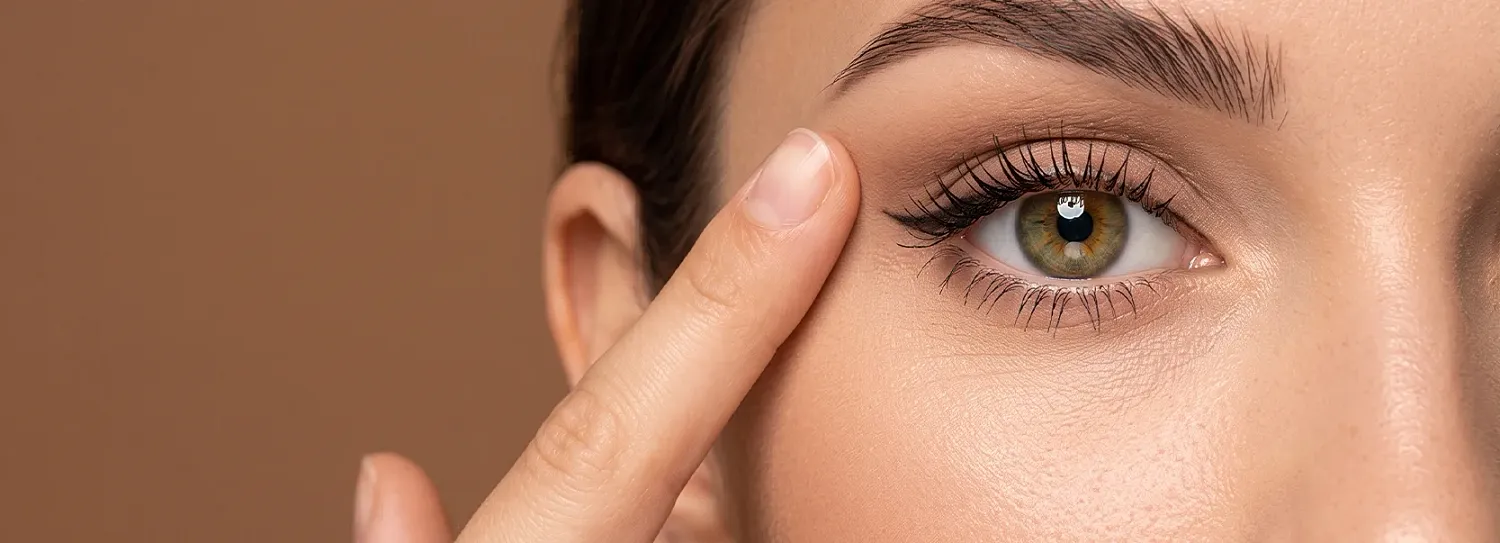
Blepharoplasty, commonly called eyelid surgery or an eyelid lift, improves heavy upper eyelids, hooded skin, under-eye bags, puffiness, and selected contour concerns around the eyes. The procedure may treat the upper eyelids, lower eyelids, or both to create a brighter and more rested appearance.
Dr. Mathew Moreno performs blepharoplasty in Houston with an emphasis on tissue preservation, natural eye shape, and conservative rejuvenation. His goal is to help patients look refreshed and alert without creating hollow upper lids, rounded lower lids, or an obviously operated-on appearance.
Blepharoplasty is face surgery that improves the skin, fat, support, and contour of the upper or lower eyelids. It can remove carefully selected excess skin, address prominent fat, smooth under-eye bags, and improve the transition between the eyelids and surrounding face.
Modern eyelid surgery is not simply about removing as much tissue as possible. Dr. Moreno evaluates the brows, upper lids, lower lids, cheek support, skin quality, and facial proportions before deciding which structures should be treated and which should be preserved.
Blepharoplasty may involve:
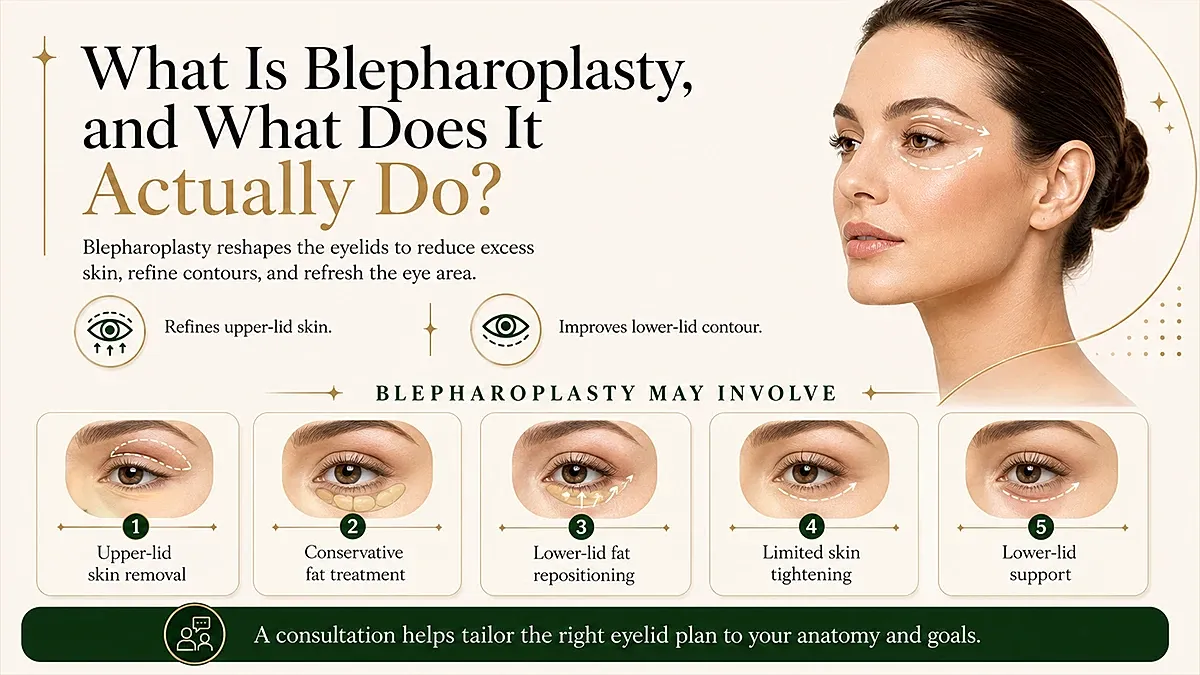

Blepharoplasty is a customized facial procedure that may treat the upper eyelids, lower eyelids, or both during the same operation. Many patients feel socially comfortable within one to two weeks, although swelling and incision maturation continue longer.
The procedure may be performed with local anesthesia and sedation or under general anesthesia depending on the surgical plan. Results are long-lasting, but the eyelids and surrounding face continue to age naturally.
Upper eyelids, lower eyelids, or both
Local anesthesia with sedation or general anesthesia
One to two weeks
Hidden in natural creases or inside the lower eyelid
Rested, natural-looking eyes
Blepharoplasty can make the eyes appear more open, smoother, and less tired while preserving the patient’s natural expression. Even subtle improvement around the eyes can influence the appearance of the entire face.
Upper surgery may reduce heaviness and restore a cleaner lid crease, while lower surgery may improve bags, puffiness, and shadowing. Dr. Moreno uses a restrained approach so the result remains balanced with the brow, cheeks, and overall facial structure.
Potential benefits include:

Upper blepharoplasty treats hooded skin, heaviness, and selected fat concerns above the eyes, while lower blepharoplasty treats bags, puffiness, laxity, and contour beneath the eyes. Some patients need only one area treated, while others benefit from combined surgery.
Dr. Moreno examines the eyelids as part of the entire upper and midface rather than treating them in isolation. Brow descent, cheek volume loss, skin quality, and lid support can all influence which operation is most appropriate.
The procedures differ in several ways:

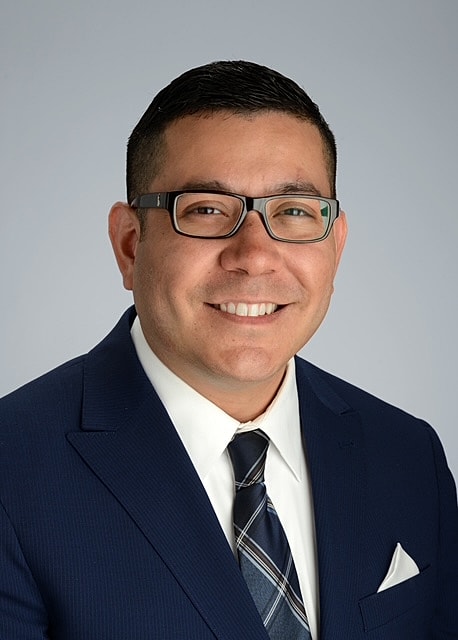
Dr. Mathew Moreno is a fellowship-trained plastic surgeon with a focused interest in facial rejuvenation and eyelid surgery. He completed six years of integrated plastic surgery residency training at the University of Kansas Medical Center, followed by a 12-month aesthetic surgery fellowship in New York.
His philosophy centers on restoration rather than transformation, with an emphasis on proportion, restraint, and preserving facial identity. Dr. Moreno believes eyelid surgery should make patients look more rested without changing the familiar shape or character of their eyes.
His approach emphasizes:
A blepharoplasty consultation determines whether the patient’s concerns come from upper-lid skin, fat distribution, brow position, lower-lid bags, skin laxity, pigmentation, or several factors together. Dr. Moreno evaluates the eyelids at rest and in motion before recommending treatment.
The visit also includes a review of dry-eye symptoms, previous filler, prior eyelid procedures, medications, nicotine use, and medical history. Dr. Moreno explains what surgery can improve, what it cannot correct, and whether another facial procedure should be considered.
Your consultation may include:

Blepharoplasty techniques differ according to which eyelid is treated, where the incision is placed, and how skin and fat are managed. The best technique depends on individual anatomy rather than a standard formula.
Dr. Moreno preserves the orbicularis muscle in both upper- and lower-eyelid planning whenever appropriate. He treats fat conservatively and may use fat grafting or nanofat to restore smoothness and avoid a hollow appearance.
Common approaches include:
You may be a good candidate if heavy upper lids, under-eye bags, loose skin, or persistent puffiness make you look tired or older than you feel. Candidacy depends more on anatomy, eyelid support, health, and goals than on age alone.
Good candidates are generally healthy, avoid nicotine, and have realistic expectations about improvement rather than perfection. Dr. Moreno also evaluates whether brow position, pigmentation, cheek descent, or dry-eye symptoms could limit the benefit of surgery.
You may benefit from an evaluation if you:
Blepharoplasty may not be appropriate for patients whose concerns are caused mainly by pigmentation, allergies, brow descent, or facial volume loss rather than eyelid anatomy. Surgery may also need to be delayed when uncontrolled medical conditions, severe dry eye, nicotine use, or active infection increase risk.
Dr. Moreno may recommend brow surgery, skincare, resurfacing, filler reversal, or observation instead. Responsible patient selection includes advising against eyelid surgery when another treatment is likely to provide a better or safer result.
The procedure may not be suitable for patients with:

Upper blepharoplasty is performed through an incision placed within the natural eyelid crease. Dr. Moreno removes a carefully measured amount of excess skin while preserving the orbicularis muscle and treating fat very conservatively.
His approach is designed to avoid over-resection and the hollow A-frame appearance that can occur when too much upper-lid volume is removed. In selected patients, fat grafting may be used to restore upper-lid or brow fullness.
Upper blepharoplasty may include:

Dr. Moreno often performs lower blepharoplasty through a transconjunctival incision placed inside the eyelid. This approach allows treatment of herniated fat without a visible external scar and without routinely excising the orbicularis muscle.
Skin treatment is customized according to laxity and Fitzpatrick skin type, and canthopexy may be added when lid support is weak. Nanofat may also be used to smooth the eyelid-to-cheek junction and improve skin quality.
Lower blepharoplasty may include:

Blepharoplasty before-and-after photos should show brighter, smoother eyelids while preserving natural eye shape and expression. Strong results should not make the upper lids look hollow or the lower lids look rounded or pulled downward.
Photos should be viewed as educational examples rather than guarantees of an identical result. Dr. Moreno can explain how brow position, eyelid anatomy, skin quality, fat distribution, and healing may affect the outcome.
When reviewing photos, look for:
A personalized consultation is the first step in determining whether upper, lower, or combined eyelid surgery is appropriate. Dr. Moreno evaluates the eyelids, brows, cheeks, skin, lid support, and previous treatments before recommending a plan.
Submitting the consultation form does not commit you to surgery and does not replace an in-person facial and eye examination. A patient coordinator can contact you to discuss scheduling and preparation.

Blepharoplasty recovery commonly involves swelling, bruising, tightness, irritation, and temporary dryness or tearing. Most patients feel socially comfortable within one to two weeks, although subtle swelling and scar maturation continue longer.
Dr. Moreno provides detailed instructions regarding cold compresses, head elevation, eye lubrication, activity, and incision care. Final refinement develops gradually as swelling resolves and the eyelids soften.
Recovery guidance may include:

The most noticeable swelling and bruising usually occur during the first several days, followed by gradual improvement during the first two weeks. Lower-eyelid surgery and combined procedures may take longer to settle than upper blepharoplasty alone.
The following timeline is a general guide rather than a guarantee. Recovery varies according to the operation performed, individual healing, skin treatment, and whether another facial procedure is included.

Upper-eyelid scars are placed within the natural crease, while lower-eyelid incisions may be hidden inside the eyelid. When a lower skin incision is needed, it is placed discreetly beneath the lash line or as a limited skin pinch.
Scar quality depends on technique, genetics, skin type, sun exposure, and postoperative care. Dr. Moreno selects incision placement carefully and monitors healing throughout recovery.
Scar considerations include:
Blepharoplasty cannot fully correct every cause of tired-looking eyes or facial aging. Pigmentation, crow’s feet, severe brow descent, cheek volume loss, and skin texture may require separate treatment.
Dr. Moreno explains these limitations during consultation so patients understand what the operation can realistically accomplish. A combined plan may be recommended when several anatomical factors contribute to the concern.
Blepharoplasty may not fully correct:
Blepharoplasty carries risks such as bleeding, infection, scarring, dry eye, asymmetry, prolonged swelling, and dissatisfaction with the result. Lower-eyelid surgery also carries specific risks including retraction, ectropion, and changes in eye shape.
Dr. Moreno reduces avoidable risk through conservative fat treatment, orbicularis preservation, careful skin management, and selective canthopexy. Patient selection and postoperative follow-up are equally important.
Potential risks include:

The cost of blepharoplasty in Houston depends on whether the upper eyelids, lower eyelids, or both are treated. Anesthesia, facility expenses, fat repositioning, skin resurfacing, canthopexy, and combined facial procedures can also affect pricing.
Dr. Moreno provides a personalized quote after completing an examination and treatment plan. Patients should confirm whether the quoted fee includes anesthesia, facility costs, postoperative visits, and related care.
Factors that may affect cost include:
Blepharoplasty should be selected according to the actual cause of eyelid aging rather than the assumption that all heaviness or puffiness requires tissue removal. The strongest results come from preserving useful fat and muscle while correcting only what is necessary.
Patients should understand that overly aggressive surgery can create hollowing, lid malposition, or a change in eye shape. A thoughtful decision includes realistic expectations, careful surgeon selection, and a clear understanding of the recommended technique.
A practical blepharoplasty guide should cover:
Blepharoplasty should make the eyes look brighter, smoother, and more rested without changing the patient’s identity. Upper surgery may create a cleaner crease, while lower surgery may reduce bags and improve the eyelid-to-cheek transition.
Final results depend on anatomy, skin quality, healing, brow position, and the extent of treatment. Dr. Moreno focuses on balanced improvement that looks natural both at rest and during facial expression.
Realistic improvements may include:

Blepharoplasty can provide long-lasting improvement because excess skin and selected fat are treated surgically. The eyes and surrounding face continue to age, but patients generally maintain a more refreshed appearance than they would without surgery.
Upper-lid results often remain visible for many years, while lower-lid fat treatment may be especially durable. Sun protection, stable weight, skincare, and avoiding nicotine can help support the result.
Long-term considerations include:
Blepharoplasty may be combined with other procedures when additional concerns involve the brows, cheeks, face, neck, or skin quality. A combined plan can create more complete rejuvenation when each procedure addresses a separate anatomical issue.
Dr. Moreno recommends combination surgery only when it supports facial harmony and remains medically appropriate. Some patients need eyelid surgery alone, while others benefit from a coordinated facial plan.
Common combinations include:
Patients should ask which eyelid structures need treatment, whether fat will be removed or preserved, and how the surgeon plans to protect eye shape. The answers should be based on the patient’s anatomy rather than a standard operation.
A thoughtful consultation should explain scars, recovery, dry-eye risk, lid support, and realistic limitations. Dr. Moreno encourages patients to understand exactly why a particular upper- or lower-lid technique is recommended.
Helpful questions include:
Blepharoplasty is designed to refine and refresh the eyelids, not alter the natural shape of your eyes. When performed thoughtfully, it preserves your unique features while reducing heaviness and puffiness.
Yes, heavy upper eyelids and under-eye fullness can sometimes create a tired or stern appearance. By softening these features, blepharoplasty can help you look more approachable and well-rested.
Mild asymmetry is very common and can often be improved with a customized surgical plan. The goal is to create better balance, though perfect symmetry is not realistic in any face.
Most patients look refreshed rather than “operated on.” When done well, others may notice you look more rested or youthful without identifying a specific procedure.
Yes, some patients choose to complement surgery with treatments like skin resurfacing or injectables. This can enhance overall facial rejuvenation depending on your goals.
It can help if dark circles are caused by shadowing from puffiness or contour irregularities. If pigmentation is the main issue, additional treatments may be recommended.
Modern techniques often focus on repositioning fat rather than removing it aggressively. This helps maintain a natural, smooth contour and avoids a sunken appearance.
There is no specific age, as candidacy depends more on anatomy and concerns than a number. Some patients pursue it earlier due to genetics, while others consider it later due to aging changes.
You may need to pause contact lens use for a short period during early healing. Your surgeon will guide you on when it is safe to resume wearing them comfortably.
Your results will age naturally along with the rest of your face. However, the improvements from surgery remain, so you typically continue to look more refreshed than if you had not had the procedure.
Dr. Moreno combines comprehensive plastic surgery training with advanced aesthetic fellowship experience and a focused interest in facial rejuvenation. His approach treats upper and lower eyelid aging while preserving muscle, useful fat, natural eye shape, and facial expression.
He avoids routine orbicularis excision, treats upper-lid fat conservatively, favors transconjunctival lower-lid access when appropriate, and adds canthopexy selectively. Patients can expect an honest evaluation and a surgical plan designed around long-term appearance and eyelid function.
Patients may value his focus on:

To schedule a blepharoplasty consultation, contact Dr. Mathew Moreno’s Houston office by phone or submit the secure consultation request form on this page. A patient coordinator can arrange the visit and explain what information to prepare.
During the consultation, Dr. Moreno will evaluate your upper and lower eyelids, brows, cheeks, skin, and lid support before discussing treatment options. Scheduling a consultation is an educational first step and does not obligate you to proceed.
Before your appointment, consider preparing: