 (281) 242-1061
  Schedule Consultation
Published
8 minute read
A sharper jawline can change the way the entire face is perceived. Yet when patients come to see Dr. Mathew Moreno about fullness beneath the chin or an aging neck, the solution is rarely as simple as choosing between "a little liposuction" and "a neck lift." Those procedures treat fundamentally different anatomical problems, and selecting the wrong one can mean asking a limited operation to accomplish something it was never designed to do.
As a plastic surgeon with a particular interest in facial rejuvenation, Dr. Moreno evaluates the neck in layers. He looks at the fat beneath the chin, the elasticity of the skin, the platysma muscle, the deeper structures of the neck, the jawline and even the projection of the chin. His philosophy is restoration, not transformation. The objective is not simply to make a neck tighter or thinner. It is to create a more natural relationship between the face, jawline and neck while preserving the features that make each patient recognizable.
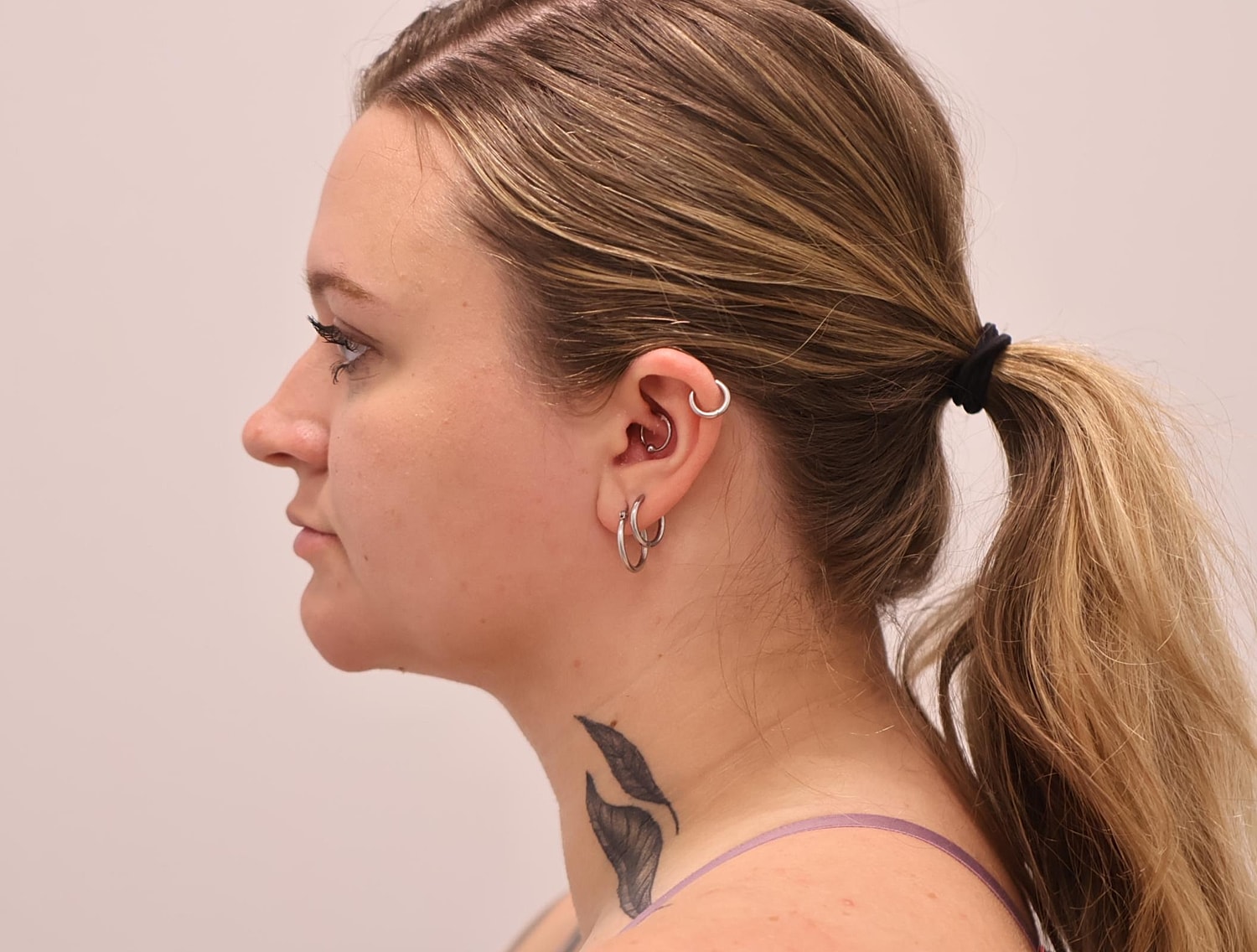
The neck may look simple from the outside, but its contour is created by several anatomical layers. Superficial fat can accumulate beneath the chin. Skin can gradually lose elasticity. The platysma muscles can separate or become more visible, creating vertical bands. Deeper fat and other structures can also affect the angle between the chin and neck.
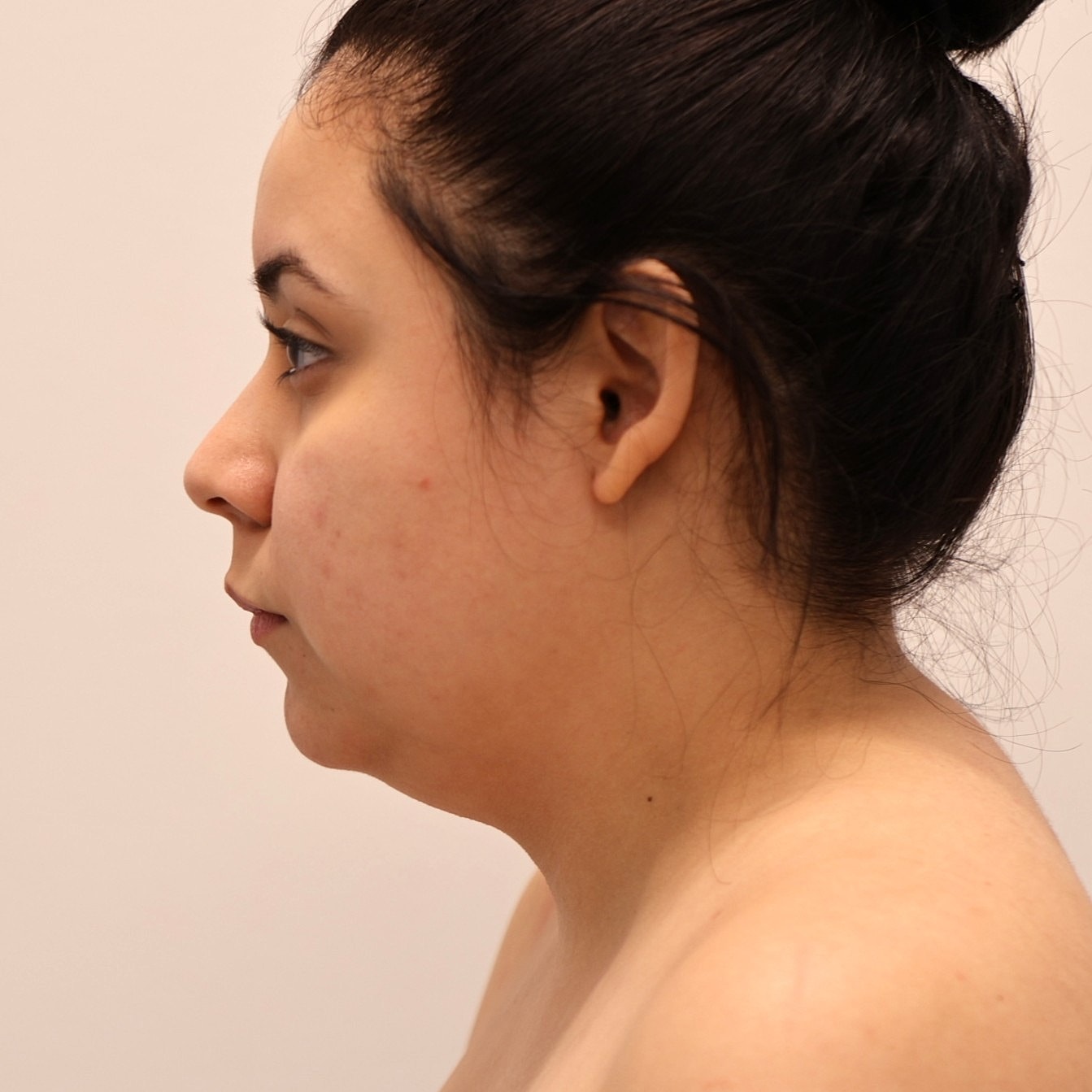
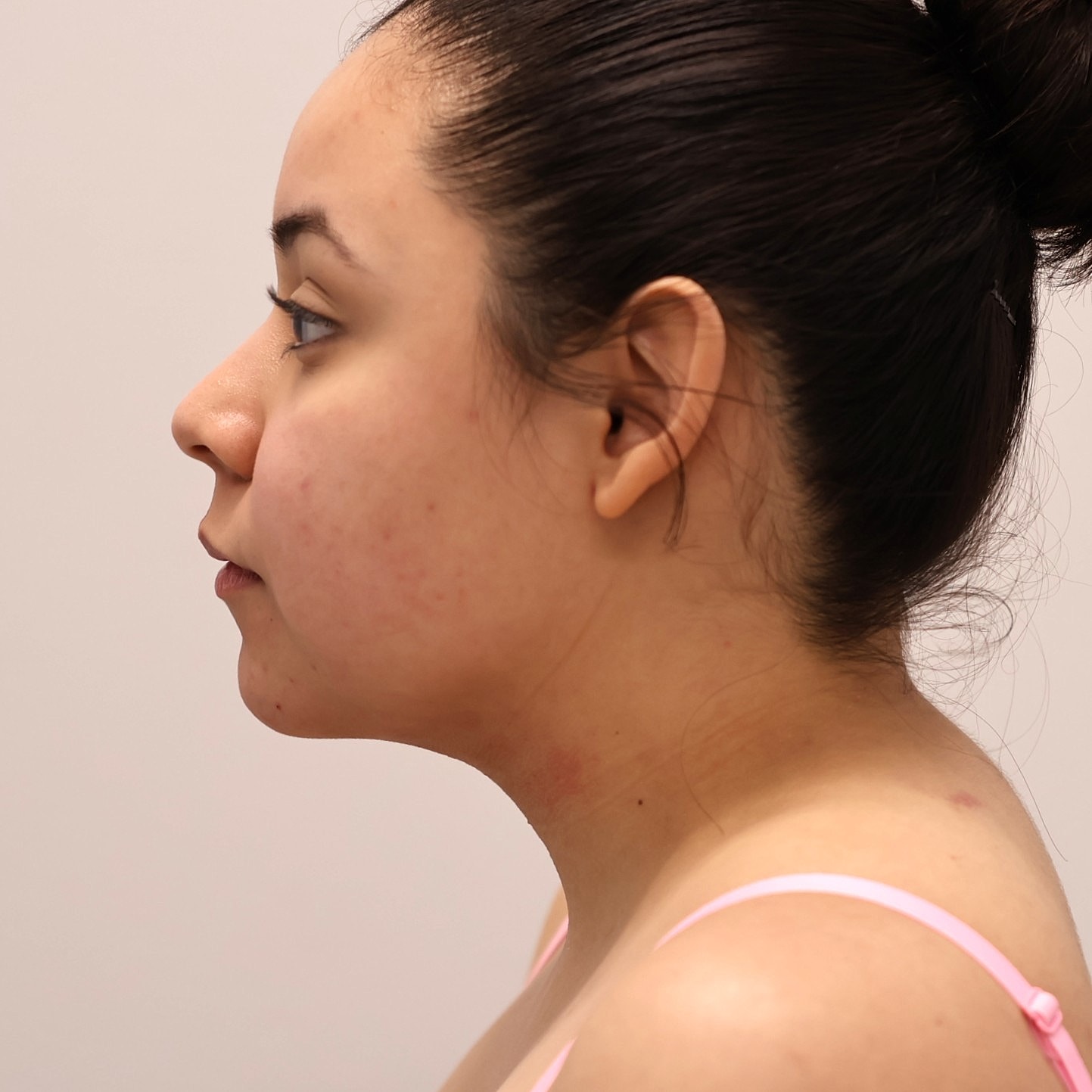
This means two patients who both describe having a "double chin" may have completely different anatomical concerns. One may have firm skin covering a localized pocket of fat. Another may have minimal fat but considerable skin laxity and platysmal banding. A third may have a combination of all three. Effective neck contouring begins by identifying which structures are responsible.
Chin liposuction, often called submental liposuction or neck liposuction, is designed primarily to reduce localized fat beneath the chin and around the upper neck. Through small access points, a slender cannula is used to remove selected fat and refine the contour between the chin, jawline and neck.
For a well-selected patient, this can produce a noticeable improvement without the tissue repositioning associated with a neck lift. The key is skin quality. Once volume has been removed, the overlying skin needs enough elasticity to adapt to the slimmer contour. If significant skin laxity or muscle banding already exists, fat removal alone may not correct the underlying problem.
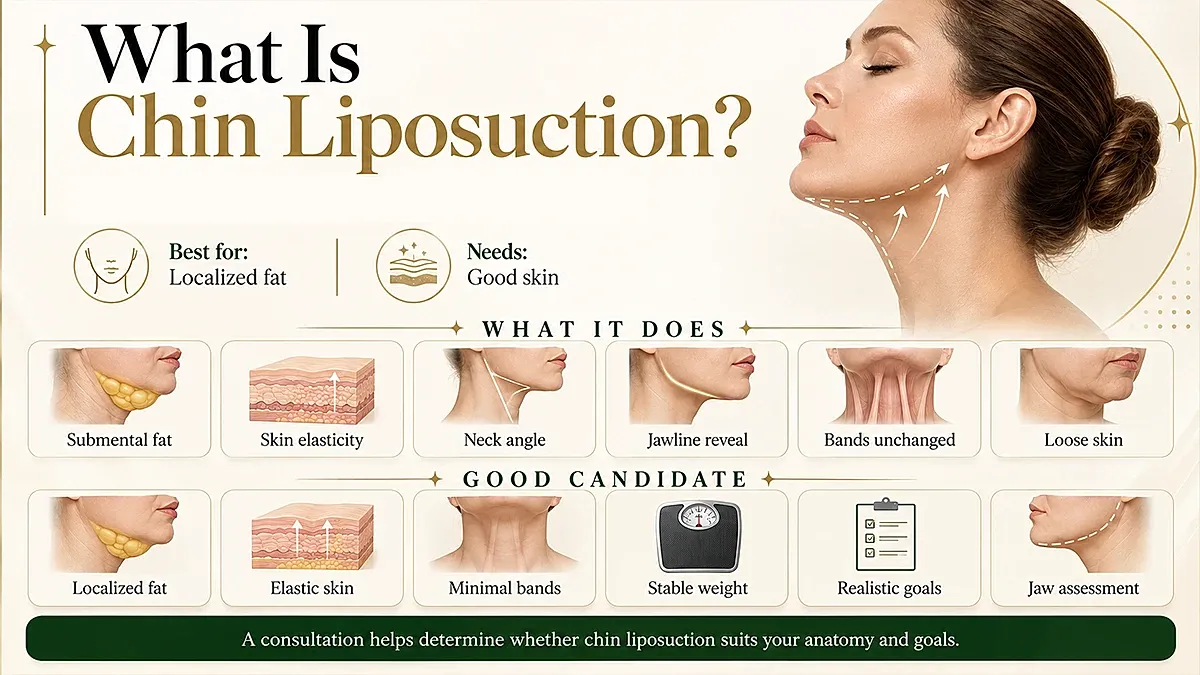
The classic chin liposuction candidate has persistent fullness beneath the chin despite maintaining a relatively stable weight. Some patients are genetically predisposed to storing fat in this area, which means a double chin can occur even in otherwise lean individuals. When the skin remains firm and elastic, removing the excess fat may be enough to significantly improve definition.
Age can provide some information about skin elasticity, but Dr. Moreno does not believe age alone should determine the operation. A patient in their 30s may have considerable laxity after major weight loss, while an older patient may maintain excellent skin tone. The anatomy in front of Dr. Moreno is more important than the birth date on the chart.
A neck lift is a more comprehensive operation because it can address several layers responsible for an aged or poorly defined neck. Depending on the patient's anatomy, surgery may involve management of loose skin, platysmal muscle laxity, excess fat and deeper anatomical structures contributing to the contour.
Dr. Moreno's documented neck lift philosophy places considerable importance on structural correction and mobilization rather than simply tightening the skin. His approach may include treatment of platysmal banding with lasting suture support, lateral platysmal work and, in carefully selected patients, attention to deeper neck anatomy. The purpose is to create a cleaner jawline and neck contour without producing an obvious pulled or windswept appearance.
Chin liposuction is fundamentally a fat-removal procedure. When excess superficial fat is the dominant reason the neck appears heavy, reducing that fat can uncover the contours underneath it. The procedure works best when those underlying structures are reasonably strong and the overlying skin can contract appropriately.
A neck lift is designed for situations in which the problem extends beyond fat. Loose skin cannot simply be suctioned away, and visible platysmal bands cannot be corrected by removing superficial fat. When several anatomical layers contribute to the appearance of the neck, a structural operation may provide a more complete solution.
Chin liposuction primarily addresses:
A neck lift can address:
One of the most important parts of a consultation is determining whether reducing fat will actually solve the patient's concern. Someone may request liposuction because it sounds less invasive, but if loose skin or muscle laxity is primarily responsible for the appearance of the neck, removing fat alone can leave the central problem untreated.
Think of the skin as the envelope surrounding the underlying tissues. When the envelope remains elastic, reducing volume may allow it to settle smoothly around a slimmer contour. When that envelope has already become lax, removing volume underneath it may reveal that looseness more clearly. In those circumstances, a procedure that also addresses skin and structural support may make more sense.
Not every patient fits neatly into a "liposuction only" or "full neck lift" category. Some people have submental fullness combined with early skin or tissue laxity but do not yet require the degree of correction offered by a more comprehensive neck lift. For these patients, a minimally invasive neck-contouring strategy may be considered.
Dr. Moreno's documented approach for appropriately selected patients can incorporate chin liposuction with additional contouring and tissue-tightening techniques. This approach has been considered particularly for younger adults with submental fullness and early neck changes. Importantly, however, minimally invasive treatments should not be portrayed as equivalent to a comprehensive neck lift when substantial skin or muscular laxity is present.
Yes. Neck lift and chin liposuction are not mutually exclusive. In some patients, superficial fat contributes to the fullness beneath the chin while loose skin or platysmal laxity contributes to the loss of definition. Treating only one of those problems may leave the other visible.
In those circumstances, fat contouring may become one part of a larger neck lift strategy. This layered approach illustrates why facial surgery is rarely about selecting a procedure from a menu. The operation should be built around the patient's anatomy and the structures that need treatment.

Published
6 minute read
One of the structures patients rarely think about until a consultation is the platysma. This thin muscle lies beneath the skin of the neck. As the tissues change over time, the muscle can become more visible or separate centrally, creating the characteristic vertical bands some people notice when talking, moving or looking in the mirror.
Liposuction cannot correct platysmal banding because the problem is muscular rather than simply fatty. Dr. Moreno's neck lift planning specifically considers platysmal banding and, when needed, uses structural techniques to address it. This is one reason Dr. Moreno believes examining the patient dynamically, rather than judging the neck only from a still photograph, is important.
Sometimes the neck is not the only reason a profile lacks definition. A relatively small or recessed chin can shorten the apparent distance between the chin and neck, making even a modest amount of submental tissue look more prominent. Removing increasingly large amounts of fat in that situation may not create the facial proportions the patient expects.
This is why Dr. Moreno evaluates the chin, mandible and neck as a connected aesthetic unit. Good facial surgery depends on proportion. A patient may need fat reduction, structural neck correction, improvement in chin projection or some combination of approaches. The goal should be harmonious contour rather than maximum reduction.
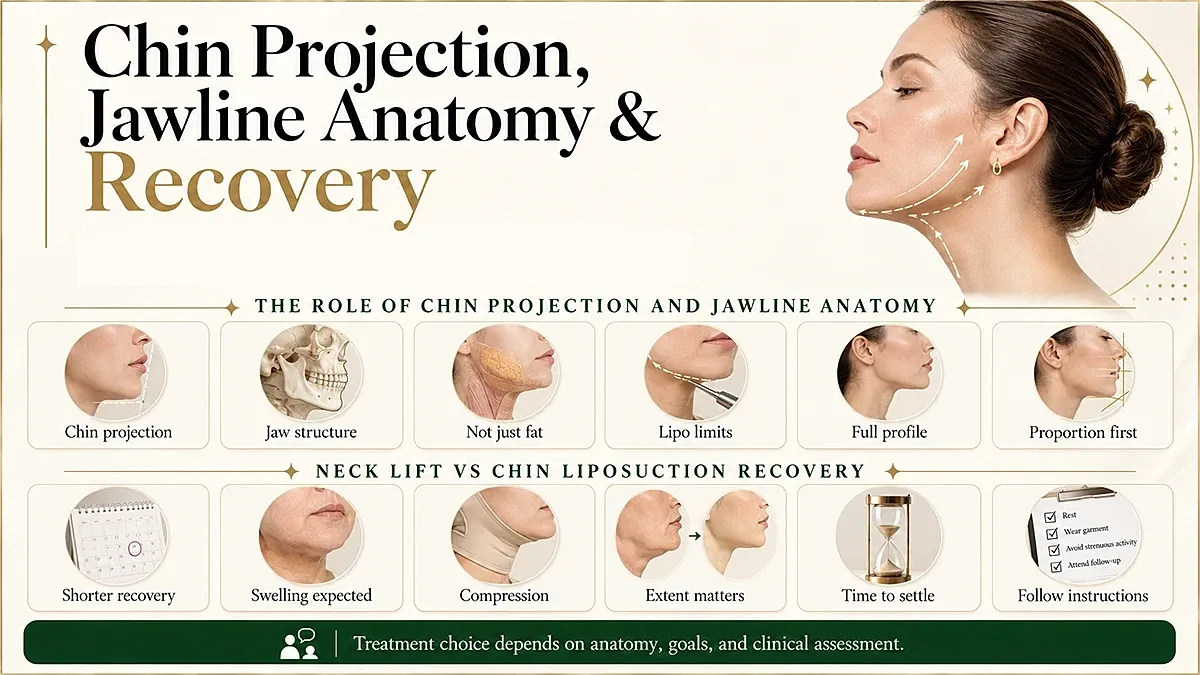
Recovery after chin liposuction is generally more limited than recovery after a comprehensive neck lift because less tissue is being surgically repositioned. Swelling and bruising are expected, and patients may be asked to wear compression after surgery. The final contour continues to evolve as swelling resolves and tissues settle.
A neck lift involves more extensive surgical correction, so patients should expect a more involved recovery. Swelling, tightness and bruising can occur, and the exact timeline depends on the procedures performed. Recovery recommendations should always be individualized rather than reduced to a universal number of days.
Chin liposuction generally requires only very small access incisions, which are positioned as discreetly as possible. For patients who qualify anatomically, limited scarring is one of the reasons the procedure can be appealing.
A neck lift requires additional access because the surgeon needs to work with tissues that cannot be treated through liposuction alone. Incisions are typically planned around natural contours and less conspicuous areas. The trade-off is greater surgical access in exchange for the ability to address loose skin and deeper structural changes.
When fat cells are removed through liposuction, those specific cells do not regenerate in the same way, although significant future weight gain can still alter the contour. Maintaining a relatively stable weight helps preserve the improvement. The skin and other structures of the neck, however, will continue to age.
A neck lift can create a substantial and durable improvement in neck contour, but it does not stop time. Skin quality, genetics, sun exposure, weight changes and the natural aging process continue after surgery. Dr. Moreno prefers to explain facial rejuvenation as resetting anatomy to a more youthful position rather than promising permanent immunity from aging.
Significant weight loss can dramatically change the face and neck. Some patients lose submental fat and develop more visible loose skin, while others notice volume loss across the cheeks and temples that changes the way the lower face and neck are perceived. The result can be a leaner face that nevertheless looks older or less balanced.
This is another situation in which automatically removing more fat can be counterproductive. Dr. Moreno's documented interests in post-GLP-1 facial surgery include thoughtful volume restoration with facial fat grafting when appropriate. The neck therefore needs to be evaluated in the context of the entire face rather than treated as an isolated problem.
During consultation, Dr. Moreno does not begin by deciding which procedure he wants to perform. He begins by identifying what is producing the patient's concern. He assesses superficial fat, skin quality, muscle position, jawline definition, chin projection and the relationship between the face and neck.
He then matches the operation to the anatomy. Sometimes that means liposuction. Sometimes it means a minimally invasive contouring procedure. Sometimes meaningful correction requires an isolated neck lift or broader face and neck rejuvenation. Knowing when to do less is an important part of aesthetic judgment, but so is recognizing when a smaller operation simply cannot achieve the patient's goal.
It can be when excess superficial fat is the primary cause of the double chin and the patient has good skin elasticity. When loose skin, platysmal bands or deeper structural changes contribute to the appearance, a neck lift may provide more complete correction.
Chin liposuction removes fat rather than loose skin. Some patients with good elasticity experience natural contraction after fat removal, but significant skin laxity generally requires a different strategy.
There is no universally correct age. Skin elasticity, muscle laxity, genetics, weight history and anatomy are more useful than age alone when determining whether someone needs liposuction, minimally invasive contouring or a neck lift.
Yes, when fullness beneath the chin is one component of the patient's anatomy. Fat contouring may be incorporated into neck lift surgery while loose skin, platysmal banding and other structural concerns are addressed at the same time.
Either procedure can improve jawline definition when correctly matched to the anatomy. Liposuction may reveal the jawline when fat is hiding it, while a neck lift may provide greater improvement when loose tissues and muscle laxity are responsible.
Potentially, yes. A patient who is an appropriate candidate for liposuction at one stage of life may develop skin or muscle laxity later as aging continues. Future surgery should be evaluated based on the anatomy present at that time.
A physical examination is the most reliable way to determine the answer. The surgeon needs to assess how much of the concern comes from fat, skin, muscle, deeper neck anatomy and facial structure before recommending a procedure.
Published
2 minute read
If you are staring at your profile and wondering whether the answer is chin liposuction, a neck lift, or something in between, you should not have to figure that out from before-and-after photographs on social media.
At Body by Ravi Plastic Surgery & Associates in Houston, Dr. Moreno approaches neck contouring by first identifying exactly what is creating the fullness, laxity or loss of definition you see. From there, Dr. Moreno and the patient can build a plan designed around the patient's anatomy, goals and one guiding principle: restore the contour, preserve the person.
Ready to rediscover your jawline? Schedule a consultation with Dr. Mathew Moreno, MD at Body by Ravi Plastic Surgery & Associates in Houston and find out which approach makes sense for your neck, not somebody else's.