 (281) 242-1061
  Schedule Consultation
Recovery after chin liposuction is usually manageable, with most patients returning to light routines within several days. Swelling, firmness, numbness, and final jawline definition improve more gradually over several weeks or months.
Chin liposuction removes localized fat beneath the chin and along the upper neck to create a cleaner transition between the jaw and throat. At Body by Ravi Plastic Surgery & Associates, Dr. Mathew Moreno combines careful patient selection, precise contouring, personalized compression instructions, and close postoperative guidance to support a natural-looking result.
Chin liposuction reduces localized fat beneath the chin and may create a more defined jawline and cervicomental angle. It works best when submental fullness is primarily caused by superficial fat and the skin has enough elasticity to adapt to the new contour.
Liposuction cannot correct every cause of a poorly defined neck. Significant skin laxity, platysma banding, a small or recessed chin, enlarged glands, or deeper fat may require a different or combined treatment plan.
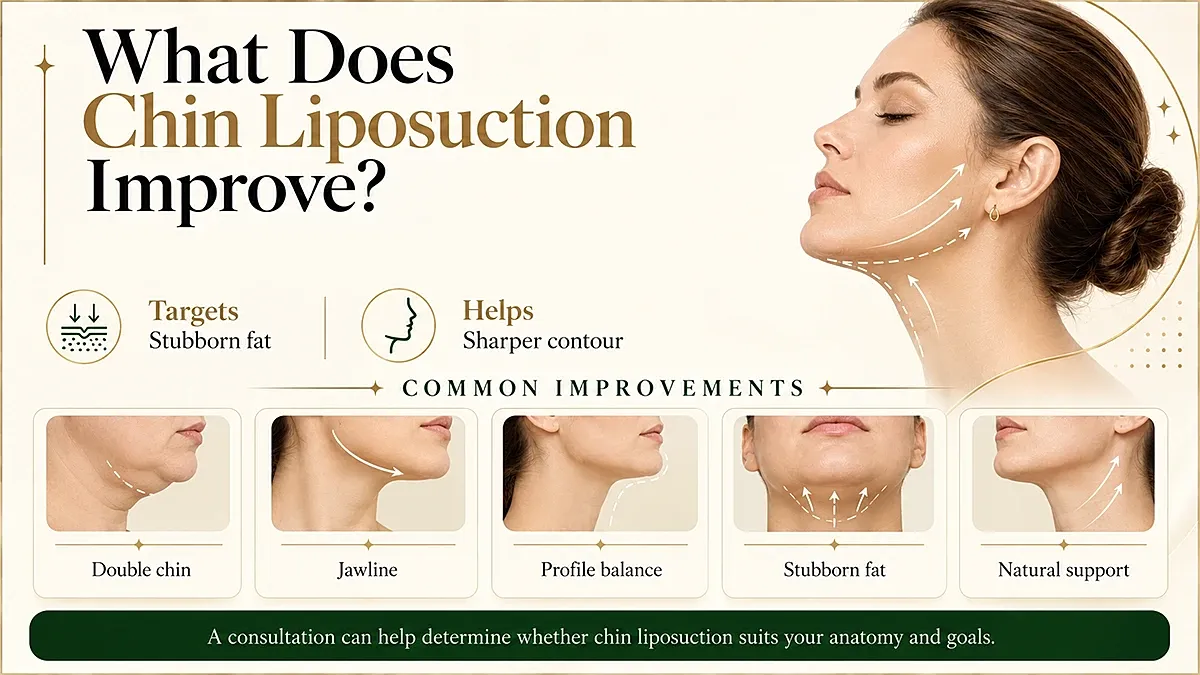
A good candidate has localized submental fat, reasonable skin elasticity, stable health, and realistic expectations. The procedure is not intended as a substitute for weight loss or a solution for every form of neck aging.
Dr. Moreno evaluates the jaw, chin projection, skin quality, fat location, muscle anatomy, and overall facial proportions before recommending treatment. This assessment helps determine whether liposuction alone can provide the desired improvement.
Preparation includes reviewing medications, supplements, allergies, nicotine use, and previous facial or neck treatments. Patients should follow all instructions about medications that may affect bleeding and should not stop prescribed drugs without medical guidance.
The recovery area should be prepared with pillows, water, approved meals, medications, and loose clothing. Patients also need reliable transportation and should arrange help if sedation or stronger medication will be used.
The first day commonly involves swelling, pressure, tightness, mild burning, numbness, and soreness. The neck may temporarily appear fuller because inflammation and fluid obscure the fat reduction.
A compression wrap may be placed to support the treated tissues and manage swelling. Patients should rest with the head elevated, take medications as directed, remain hydrated, and complete short walks without bending repeatedly at the neck.

Swelling and bruising after liposuction may become more noticeable during the second and third days before they begin improving. Firmness, temporary unevenness, and a tight sensation beneath the chin can also occur during normal early healing.
Patients should not judge the result during this stage because the new jawline remains hidden by inflammation. Recovery should be assessed by the overall trend rather than one mirror check, photograph, or difference between the two sides.
By the end of the first week, discomfort is often improving even though swelling and firmness remain. Many patients feel comfortable completing light routines and may be socially presentable with strategic clothing or makeup.
Feeling better does not mean the tissues have fully settled. Compression, positioning, activity restrictions, and follow-up instructions should continue for the duration recommended by Dr. Moreno.
The second week usually brings less bruising, reduced swelling, and a more familiar facial appearance. Early jawline definition may begin to appear, but residual fullness can still soften the result.
Many patients return to desk work or social activities during this period, depending on bruising, comfort, and treatment extent. Swelling may still look better in the morning and increase temporarily after activity or prolonged upright posture.

Weeks three through six are often when the jawline becomes noticeably cleaner and the upper neck appears more refined. Bruising is usually resolved, while swelling and firmness continue decreasing.
Small areas of lumpiness or uneven texture may still be felt beneath the skin as tissues heal. Patients should not begin massage, lymphatic treatment, or aggressive manipulation unless Dr. Moreno specifically recommends the technique and timing.
Patients are generally advised to sleep on their backs with the head and upper torso elevated during early recovery. This position may help manage swelling and prevent direct pressure on the treated neck.
A wedge pillow or several firm pillows can make elevation more stable. Side or stomach sleeping should wait until Dr. Moreno confirms that pressure and twisting will not interfere with healing.

Showering and incision care should begin only according to the postoperative instructions. Chin liposuction incisions are typically small, but they still require clean handling and protection while they close.
Patients should not apply peroxide, alcohol, makeup, skincare products, oils, or scar treatments directly over healing incisions unless approved. Baths, pools, hot tubs, and other forms of submersion should wait until the entry sites are fully sealed.
Many patients return to desk-based work within several days to one week, depending on swelling, bruising, medication use, and personal comfort. Those with public-facing roles may choose additional time until visible changes are easier to conceal.
Driving should wait until sedating medication has been discontinued and the patient can turn the head, check blind spots, and react safely. Long drives may also worsen swelling during early recovery.
Light walking is usually encouraged soon after surgery, but strenuous exercise should wait for medical clearance. Increased heart rate and blood pressure can worsen swelling or contribute to bleeding during early healing.
Exercise should resume gradually, beginning with low-intensity activity before running, heavy lifting, inversions, or high-impact training. Patients should stop if activity causes throbbing, increasing pressure, or a noticeable rebound in swelling.
Most visible swelling improves during the first several weeks, but subtle fullness can persist for a few months. Firmness, numbness, tingling, and temporary asymmetry may also resolve more slowly.
The tissues do not always heal evenly from day to day. Patients should focus on gradual improvement and contact the practice if swelling becomes sudden, rapidly progressive, very painful, or strongly one-sided.

Early improvement often becomes visible within several weeks, but the final contour should not be judged while swelling and firmness remain. Most patients see continued refinement over approximately three to six months.
The quality of the result also depends on skin elasticity, chin projection, anatomy, aging, and weight stability. Liposuction removes treated fat cells, but significant future weight gain can enlarge remaining fat cells and soften the contour again.

Successful chin liposuction depends on understanding the complete relationship between fat, skin, muscle, bone structure, and facial proportion. Removing too much fat can create irregularity, while removing too little may not produce meaningful definition.
Dr. Moreno’s calm, patient-focused approach emphasizes careful listening, natural-looking contouring, individualized recovery guidance, and realistic recommendations about when liposuction alone may not be enough.

Some patients notice a slightly different sensation when speaking in the first few days due to tightness and swelling under the chin. This is temporary and resolves as the tissues relax and swelling improves.
Firmness is a normal part of early healing and is related to swelling and tissue response beneath the skin. As recovery progresses, this typically softens and the contour becomes more natural.
Normal daily movement is safe, but excessive strain, bending, or aggressive activity too early can increase swelling and delay healing. Following activity guidelines helps protect the final contour.
Swelling can fluctuate throughout the day depending on activity levels, posture, and fluid retention. It is common for the area to look more refined in the morning and slightly fuller later in the day during early recovery.
Temporary numbness can occur because small sensory nerves are affected during the procedure. Sensation usually returns gradually as healing progresses.
Some patients describe unusual sensations such as tingling, tightness, or subtle shifting during healing. These feelings are typically part of the normal recovery process as the tissues settle.
Massage should only be done if specifically recommended, as incorrect technique or timing can irritate the tissues. It is best to follow personalized instructions rather than attempting to speed up recovery independently.
Temporary asymmetry is often caused by uneven swelling, which is common during healing. As swelling resolves, the contour usually becomes more balanced and refined.
Significant weight gain can affect fat distribution throughout the body, including the chin and neck area. Maintaining a stable weight helps preserve the long-term results.
Many patients experience moments of impatience or concern, especially when swelling temporarily hides the result. This is a normal part of the process, and confidence usually improves as visible refinement develops over time.
A consultation determines whether chin liposuction matches the cause of your submental fullness and your desired result. Dr. Moreno evaluates skin tone, superficial fat, jaw definition, chin projection, neck muscles, medical history, and prior treatments.
Patients should also discuss recovery timing, work obligations, compression, exercise, and the possibility that another procedure could provide a more complete result. The goal is a personalized plan that improves definition without creating an overtreated appearance.