 (281) 242-1061
  Schedule Consultation

Published
8 minute read
Fat transfer and a Brazilian Butt Lift both use a patient’s own fat, but they are not interchangeable terms. Fat transfer is a surgical technique that can restore or add volume in several areas, while a Brazilian Butt Lift is a specific body contouring operation involving liposuction and gluteal fat grafting.
At Body by Ravi Plastic Surgery & Associates in Houston, Dr. Ravi helps patients understand what each procedure can realistically accomplish. His recommendations are based on anatomy, donor-fat availability, skin quality, safety, lifestyle, and the type of proportionate change the patient hopes to achieve.
Fat transfer is a surgical technique that removes fat from one area and places it into another area that needs volume or contour refinement. It is also called fat grafting or autologous fat transfer.
The procedure generally includes liposuction, preparation of the harvested fat, and careful placement into the recipient area. Dr. Ravi may use fat transfer for body contouring, breast enhancement, facial volume restoration, asymmetry correction, or selected reconstructive needs.
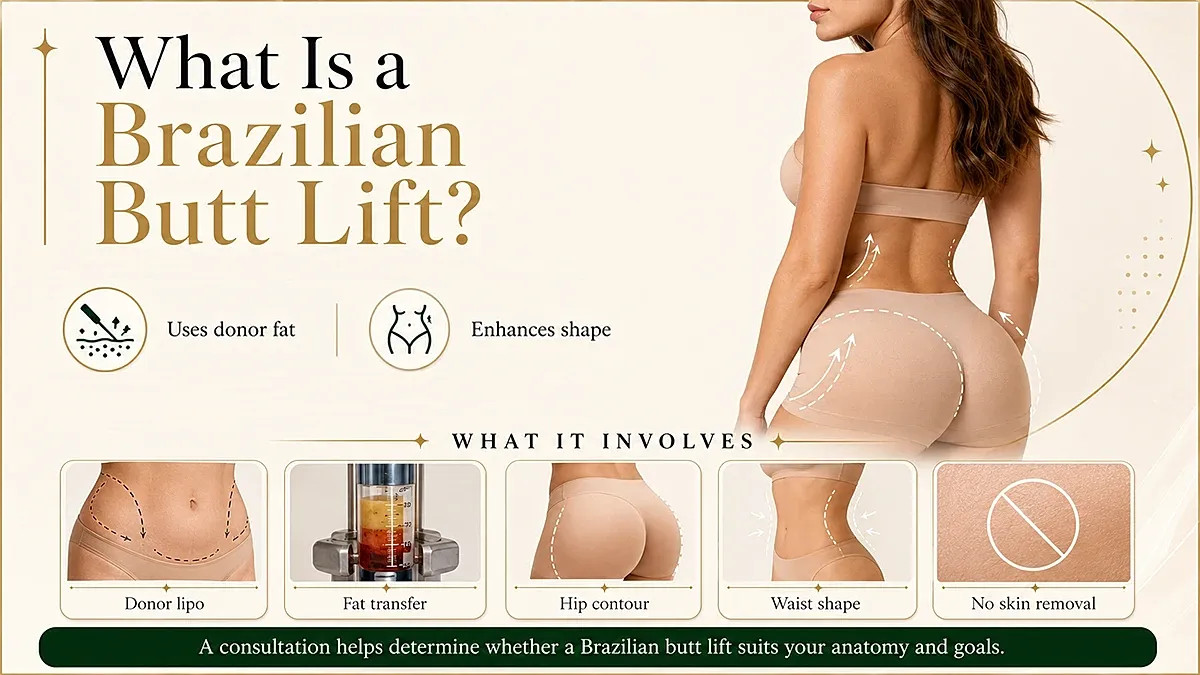
A Brazilian Butt Lift, commonly called a BBL, is a specific form of gluteal fat grafting combined with body liposuction. Its goal is to improve the relationship between the waist, hips, lower back, and buttocks.
Despite its name, a BBL usually does not lift the buttocks by removing loose skin. Dr. Ravi creates the appearance of improved shape through selective fat removal and carefully planned subcutaneous fat placement.
No. A Brazilian Butt Lift is one type of fat-transfer procedure, but fat transfer can be performed in many other areas.
Fat may be transferred to the breasts, face, hips, contour irregularities, or selected surgical defects. The term BBL should be used only when fat is grafted to the buttocks as part of a gluteal contouring plan.
The main difference is the purpose and scope of treatment. General fat transfer may focus on a small area, while a BBL usually involves comprehensive contouring of the torso and buttocks.
A patient receiving a modest fat transfer may have one donor site and one recipient area. During a BBL, Dr. Ravi evaluates the abdomen, waist, flanks, lower back, hips, and buttocks together to create a balanced silhouette.
Liposuction is essential because it provides the fat for grafting and reshapes the areas surrounding the buttocks. In many patients, improved waist and lower-back definition contributes as much to the result as the added gluteal volume.
Dr. Ravi uses SAFE Liposuction principles to separate, aspirate, and equalize fat while refining the donor areas. Careful contouring can create a smoother transition from the waist to the hips without relying on excessive buttock augmentation.
A standard BBL does not remove significant loose skin. It may create the visual impression of lift by changing volume and the surrounding contours.
Patients with substantial skin laxity after major weight loss may need a true buttock lift or lower-body lift involving skin removal. Dr. Ravi distinguishes these procedures during consultation because fat grafting alone cannot reliably tighten a large skin envelope.
Fat is collected through liposuction from areas with sufficient unwanted tissue. It is then prepared to separate usable fat from excess fluid, blood, oil, and other material.
Handling methods vary according to the recipient area and the surgeon’s technique. Dr. Ravi focuses on gentle harvesting and controlled placement because fat-cell survival depends partly on how the tissue is collected, processed, and transferred.
A BBL carries risks that do not apply in the same way to every recipient area. The large gluteal veins and consequences of unintended deep injection make technique especially important.
Other fat-transfer procedures also have possible complications, including infection, asymmetry, fat necrosis, contour irregularity, bleeding, and the need for revision. Dr. Ravi evaluates the risks according to the specific donor and recipient areas rather than describing all fat transfers as equally complex.
A candidate for fat transfer should be healthy enough for surgery, have a suitable donor area, and want a realistic amount of volume enhancement. Stable weight and avoidance of nicotine are also important.
Dr. Ravi evaluates skin quality, circulation, medical conditions, medication use, previous surgery, and expectations. Very lean patients may not have enough donor fat to produce the requested change.
A BBL candidate generally wants to improve buttock shape and surrounding torso proportions using their own fat. The patient must also have enough subcutaneous donor fat and be prepared for a more restrictive recovery.
Candidacy is not determined by photographs or desired cup-style measurements of the buttocks. Dr. Ravi considers pelvic structure, muscle shape, fat distribution, skin elasticity, health, and whether a safe, balanced result is achievable.
Some thinner patients can undergo gluteal fat grafting, but the achievable change may be limited. A small amount of donor fat cannot reliably produce a dramatic increase in projection.
Dr. Ravi may focus on selective waist contouring, hip-dip refinement, or modest fat placement when anatomy allows. Patients should be cautious of promises that a very lean frame can produce an extreme result without compromising other contours.
Yes. Fat can be placed to smooth transitions, improve symmetry, or refine curves without creating a major increase in overall size.
This type of treatment may be appropriate for hip dips, small contour irregularities, or uneven volume. Dr. Ravi often emphasizes shape and balance because a focused correction can sometimes improve the silhouette more effectively than broad augmentation.
Recovery depends on the donor area, recipient area, liposuction extent, and total surgical plan. A small fat-transfer procedure may have fewer restrictions than a full torso liposuction and BBL operation.
Gluteal fat grafting often requires patients to limit direct pressure on the buttocks during early healing. Dr. Ravi provides specific sitting, sleeping, garment, walking, bathing, and activity instructions based on the operation performed.
Sitting instructions vary, but prolonged direct pressure on newly grafted areas is generally restricted during early recovery. Necessary sitting may require modified positioning or a support device according to the surgeon’s instructions.
Patients should follow the exact protocol provided by Dr. Ravi rather than relying on a universal online timeline. The location of fat placement, amount transferred, work requirements, and individual healing can affect when ordinary sitting is resumed.


Published
4 minute read
Patients can expect soreness, tightness, swelling, and tenderness, particularly in liposuction donor areas. The intensity varies according to treatment extent and personal pain tolerance.
Dr. Ravi uses Enhanced Recovery protocols and multimodal pain management to improve comfort and reduce reliance on postoperative narcotics when medically appropriate. Medication, walking, hydration, compression, and careful positioning may all form part of the recovery plan.
Early contour changes are visible soon after surgery, but swelling and temporary overcorrection can obscure the final appearance. Several months may be needed for swelling to settle and retained fat volume to stabilize.
Dr. Ravi evaluates progress over time rather than judging the outcome during the first few weeks. The donor areas and recipient area may mature at different rates, especially after extensive liposuction.
Fat cells that successfully establish a blood supply can remain long term. However, the result is not immune to aging, pregnancy, weight changes, or future changes in skin elasticity.
Transferred fat behaves similarly to fat elsewhere in the body and may enlarge with weight gain or shrink with weight loss. Dr. Ravi encourages patients to reach a sustainable weight before surgery and maintain consistent health habits afterward.
A BBL may be combined with an abdominoplasty in selected patients, but combination surgery increases complexity and affects positioning during recovery. Not every patient is an appropriate candidate for both procedures at once.
Dr. Ravi considers health, body mass index, blood-clot risk, operative time, tissue needs, and the practical conflict between protecting the abdomen and avoiding pressure on the buttocks. In some cases, staging the procedures may offer a safer or more manageable recovery.
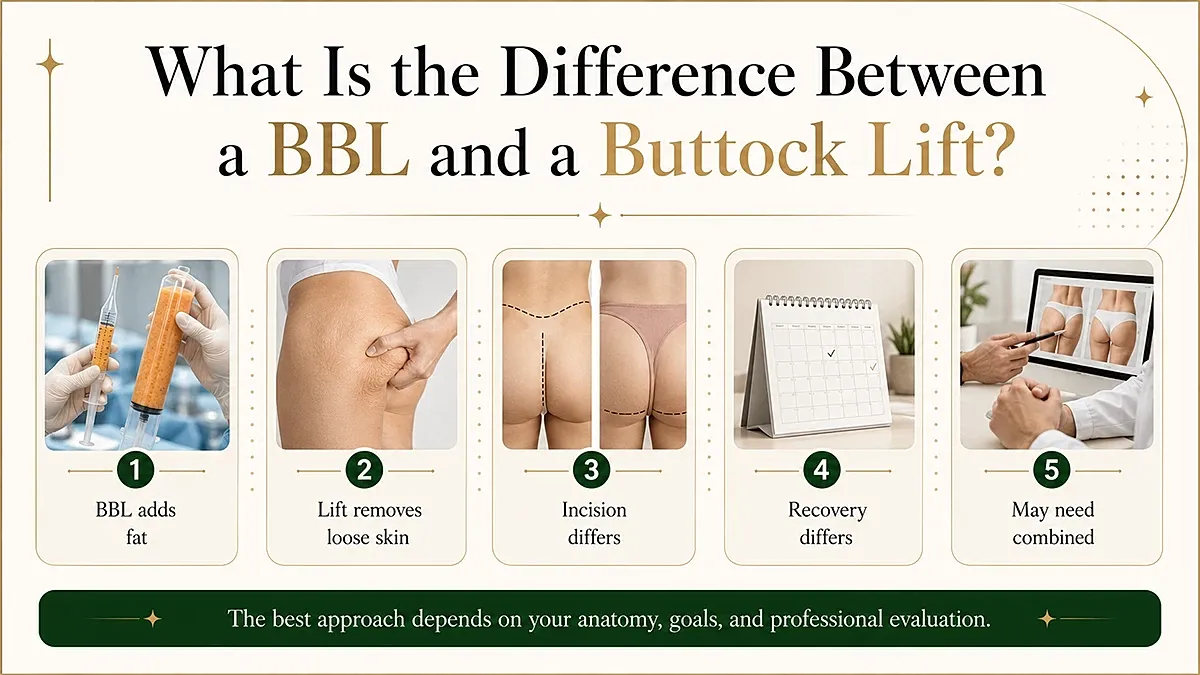
A BBL adds fat and reshapes surrounding areas, while a true buttock lift removes excess skin and repositions tissues. They address different anatomical concerns.
A buttock lift may be appropriate after substantial weight loss when loose skin is the dominant problem. Dr. Ravi explains that adding fat cannot substitute for skin removal when the tissues have significant laxity.
Possible complications include bleeding, infection, fluid collections, asymmetry, contour irregularity, fat necrosis, oil cysts, scarring, altered sensation, and dissatisfaction with volume. Additional surgery may occasionally be required.
Liposuction can also cause waviness, skin injury, unevenness, prolonged swelling, or changes in pigmentation. Dr. Ravi reviews both donor-site and recipient-site risks because fat transfer affects more than one region of the body.
Dr. Ravi brings more than 20 years of plastic surgery experience and has performed over 15,000 procedures. His body contouring philosophy focuses on safety, proportion, natural-looking results, and individualized planning.
He uses SAFE Liposuction principles, Enhanced Recovery protocols, multimodal pain management, and a team-based surgical approach. Patients receive detailed education about realistic outcomes, recovery responsibilities, alternatives, and risks before choosing surgery.
Choose based on the area being treated, the amount of change desired, donor-fat availability, anatomy, and willingness to follow recovery restrictions. Neither option is automatically better for every patient.
During consultation, Dr. Ravi evaluates whether a focused fat transfer, comprehensive BBL, liposuction alone, skin-removal procedure, or staged plan is most appropriate. The best operation is the one that addresses the actual anatomical concern without adding unnecessary risk.
Yes. Much of the visual change comes from sculpting the waist, flanks, and lower back rather than from fat added directly to the buttocks. Improving surrounding contours can significantly enhance projection and shape.
Body proportions, pelvic structure, and skin quality all influence how fat transfer appears. The same volume can look subtle on one person and dramatic on another due to anatomical differences.
Yes. Fat can be placed strategically to smooth transitions, correct asymmetry, or enhance curves without making the area noticeably larger. This approach is often used for refinement rather than augmentation.
Brief, unavoidable sitting usually does not ruin results, but prolonged pressure early in recovery can reduce fat survival. Following positioning instructions during the first few weeks is important for optimal outcomes.
Fat cells need access to blood supply to survive. Overfilling an area can compromise fat survival and increase the risk of firmness or irregularities.
Yes. Transferred fat behaves like normal fat and can shrink with weight loss. Maintaining a stable weight helps preserve long-term results.
In some cases, yes, but results are typically more subtle. Limited donor fat means careful planning is required, and expectations must align with what the anatomy allows.
Fat transfer alone usually involves fewer restrictions, while BBL recovery requires protecting the buttocks from pressure. The difference reflects the scale and goals of each procedure.
Some patients notice improved softness and skin texture, as fat contains regenerative components. This is considered a secondary benefit rather than a guaranteed outcome.
The recommendation is based on anatomy, safety, and long-term proportion rather than trends. In some patients, fat transfer alone can achieve a more balanced and natural result.
Published
1 minute read
Schedule a consultation if you are considering fat transfer, gluteal contouring, or a broader body contouring procedure. An in-person examination is necessary to determine whether your goals can be achieved safely with your available anatomy.
Dr. Ravi will review your medical history, proportions, donor areas, skin quality, goals, and anticipated recovery. Contact Body by Ravi Plastic Surgery & Associates in Houston at 281-346-9038 to request a personalized consultation.